Reef Tribe Join The Reef Tribe
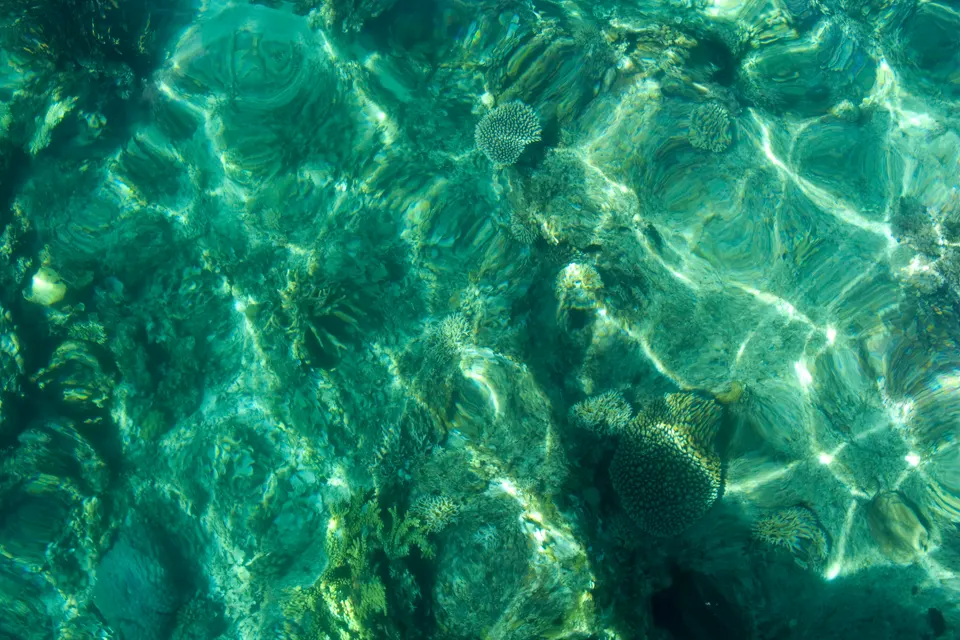
Branching coral in clear water, Bacuit Bay, El Nido, Palawan

Action Maps / Action Map 4

Action Map 4: Microfragmentation & Land-Based Propagation

Cut slow-growing boulder corals into tiny pieces so they grow and join together faster in tanks on land, then use them to cover dead reef with living coral again.

PreserveConserveRestoreProtectRegenerate

Photo: Vyacheslav Argenberg, CC BY 4.0

Sample game plan

The three lowest-effort first moves for this Action Map. Cost levels are qualitative estimates, not quotes.

2

Ask Filipino labs about land-based capacity

Why it matters

A trial is only possible if a permitted Filipino facility wants to lead. Asking is a short, non-binding conversation.

What it takes

People
Coordinator
Time
1 month
Cost
Low
Permits & partners
Conversation only; no outreach is sent from this site
3

Build a non-formal explainer for visitors

Why it matters

Visitors can learn the method from diagrams and published results, with no live coral involved.

What it takes

People
1 educator + designer
Time
2–3 weeks
Cost
Low
Permits & partners
None; non-formal education only

Roadmap

Microfragmentation is promising but young, and almost all published field results come from outside the Philippines. This roadmap keeps the early stages to learning and education, and treats any laboratory work as a Filipino-led, permitted research question rather than a product.

From the easiest work to the most advanced. In planning, and not legal advice.

  1. Stage 1: Beginner

    Learn what microfragmentation is: cutting coral into very small pieces that can grow quickly and, in some species, fuse into larger colonies (Forsman et al. 2015, micro-colony fusion). Mote Marine Laboratory developed the method most visibly in Florida (Mote Marine Laboratory, coral program news). Read Page, Muller and Vaughan carefully: their Florida Keys field tests showed the growth advantage mainly when heavy predation was excluded, and overall survival did not differ (Page, Muller and Vaughan 2018, microfragmentation). Build a non-formal visitor explainer from diagrams and published results, with no live coral. These steps are cheap and need no permits. Visitors should come away knowing why speed of growth is not the only thing that matters, and why predators, heat and disease still decide whether small colonies survive on a real reef.

    Ready for the next step when: A non-formal visitor explainer is published, with the Florida caveats stated plainly.

  2. Stage 2: Intermediate

    Ask whether any Filipino laboratory already has, or wants, land-based coral husbandry capacity. UP MSI’s Bolinao laboratory is building coral cryobank capacity (UP MSI coral cryobank announcement), and MERF is the research foundation that often contracts its projects (MERF / ACIAR coral larval restoration project). Using Philippine coral in tanks is still regulated aquatic-wildlife work under FAO 233 (FAO 233 (2010), Aquatic Wildlife Conservation), so any trial needs a Filipino permit holder and a written MOA. The center’s possible role is tanks, land, power and funding, not ownership of coral. Write predation-control and outplant-monitoring plans before anyone discusses a trial.

    Ready for the next step when: A Filipino laboratory has said whether it wants land-based capacity, and predation and monitoring plans are drafted.

  3. Stage 3: Advanced

    Only if a permitted Filipino partner leads, a tightly bounded laboratory trial could test whether the method suits local species. Outplanting would be a later, separately permitted step, and Florida results should not be treated as a Philippine protocol. Do not import coral. Measure success by surviving, reproducing colonies over years, using restoration monitoring guidance (Goergen et al. 2020, restoration monitoring guide). Any coral or in-water step is led by a Filipino institution that holds the BFAR permits, under a written MOA. The center funds and supports; coral is never sold; and education stays non-formal. Visitor demonstrations stay educational and never become a coral sale or adoption scheme. If results are poor, the right outcome is to stop and publish what was learned, which is still useful to other Philippine programs.

    Ready for the next step when: Any trial runs under the partner’s permits and an MOA, with outplanting separately approved.

Why it matters

The main technique for slow-growing boulder corals, pioneered in practice by David Vaughan and now in standard handbooks (Vaughan 2021; Reef Resilience Network course materials).

Topics this Action Map will cover

How it connects

Feeds Gardening (stock) and Assisted Evolution (captive breeding often uses the same tanks). Is fed by Science, Water Quality (source water), and Philippines (permits for holding and transporting coral).

Key sources

Videos

Bringing Coral Reefs Back To Life | Dr. David Vaughan | TEDxBermudaTEDx Talks · 18:26 · Action Map 4: Microfragmentation & Land-Based PropagationDavid Vaughan explains microfragmentation, the method that speeds growth of massive corals in land nurseries.Watch on YouTube ↗

Books

Research library

Filter this Action Map’s papers by the action they help you take — Preserve, Conserve, Restore, Protect or Regenerate.

Loading research for this Action Map…

Philippines action plan

Microfragmentation is a land-based husbandry method developed most visibly at Mote Marine Laboratory. Using Philippine coral for it would still be regulated aquatic-wildlife work.

In planning, and not legal advice. This is a working educational plan for a center that is not yet operating or permitted. Confirm every permit with Philippine counsel, BFAR, DENR (including the Biodiversity Management Bureau and the Protected Area Management Board of any protected area), DENR-EMB, the relevant LGU and, in Palawan, the PCSD, before any field work.

Who can lead in-water coral work. Gathering, possessing, selling or exporting corals is generally unlawful in the Philippines, except for scientific or research purposes under a special permit from the Department of Agriculture / BFAR (Philippine Fisheries Code of 1998, Sec. 91 (RA 8550); BFAR FAO 202, s. 2000, Ban on Coral Exploitation and Exportation). Collection and conservation breeding of aquatic wildlife, including coral, is also regulated under FAO 233, issued pursuant to the Wildlife Act, and typically requires a Gratuitous Permit or related BFAR authority (FAO 233 (2010), Aquatic Wildlife Conservation; FAO 233 text (FAOLEX); Wildlife Resources Conservation and Protection Act (RA 9147)). The Constitution reserves exploration, development and utilization of natural resources to Filipino citizens or corporations at least 60% Filipino-owned, and the 13th Regular Foreign Investment Negative List reserves utilization of marine resources in archipelagic waters, the territorial sea and the EEZ to Philippine nationals (1987 Constitution, Art. XII, Sec. 2; 13th Regular Foreign Investment Negative List (EO 113, s. 2026)). For those reasons, any in-water coral work contemplated here would be led by Filipino scientific and community partners, not by a foreign principal acting alone.

The permit chain (to be confirmed site by site, anywhere in the Philippines) generally includes: review by the Protected Area Management Board where a site lies inside a protected area under the Expanded NIPAS Act (Expanded NIPAS Act of 2018 (RA 11038)); an Environmental Compliance Certificate or Certificate of Non-Coverage from DENR-EMB under the EIS System (PD 1586 / Philippine EIS System (DENR-EMB ECC/CNC)); BFAR authority for any coral handling; and local government permits. Municipal fisherfolk have preferential rights in municipal waters under the Fisheries Code. Some regions add their own layer. In Palawan, for example, that means Palawan Council for Sustainable Development (PCSD) zoning/ECAN certification and SEP clearance under RA 7611 (Strategic Environmental Plan for Palawan Act (RA 7611)); and, at El Nido, review by the Protected Area Management Board of the El Nido–Taytay Managed Resource Protected Area (Presidential Proclamation No. 32, s. 1998 (ENTMRPA)).

Existing work across the country. Filipino institutions already lead reef science and restoration nationwide: the University of the Philippines Marine Science Institute and the Marine Environment and Resources Foundation in Bolinao and beyond (UP MSI coral cryobank announcement; MERF / ACIAR coral larval restoration project); Silliman University’s Institute of Environmental and Marine Sciences in the Visayas and Mindanao (Silliman University, 10 Dec 2025 — SU-IEMS coral reef restoration research; Silliman University, 29 Jun 2026 — SU-IEMS fish visual census training, Davao Oriental); UP Visayas (UP Visayas CFOS-IMFO, coral reef assessment training in Antique); Mindanao State University at Naawan (MSU at Naawan, Coral Reef Management (CoReM) Hub); Davao Oriental State University in Pujada Bay (DORSU, 23 Jul 2025 — Pujada Bay artificial reef results); the Coastal Conservation and Education Foundation (CCEF, Aug 2024 — 3D-printed clay reef workshop, Maria, Siquijor); and local programs such as the El Nido Foundation in Palawan (El Nido Foundation, Coral Reef Restoration and Education Program). A planned center should complement that work, not overwrite it. A public record of past work is not a partnership agreement, and current BFAR permit numbers were not independently verified for this page.

First 90 days

Year 1

Longer term

Learning path

A beginner-to-expert arc: start with why the work matters, then methods and sources, then local application with Filipino partners.

Beginner

Learn the idea: very small fragments can grow and sometimes fuse faster than larger ones (Forsman et al. 2015; Mote explainers).

Intermediate

Read Page et al. (2018): in the Florida Keys, the growth advantage appeared when heavy predation was excluded, and survival did not differ overall.

Expert

Judge whether a permitted Philippine laboratory trial is even appropriate; do not treat Florida results as a Philippine protocol.

Key organizations & tools

These are other organisations’ resources and public programs. Listing them is not a partnership claim.

Glossary & FAQ

Answers are limited to points we can cite from the research library or from official and peer-reviewed sources. Questions we cannot answer that way are left out.

What is coral microfragmentation?

It is a husbandry method in which corals, often slow-growing massive species, are cut into very small pieces (on the order of 1–3 cm²). Forsman et al. (2015) reported rapid tissue growth and fusion of fragments from the same colony. Page et al. (2018), working at Mote in the Florida Keys, found that when plots with heavy predation were excluded, Orbicella faveolata microfragment arrays produced about ten times more tissue than larger fragments over 31 months; overall survival and growth did not differ. Forsman et al. 2015, micro-colony fusion; Page, Muller and Vaughan 2018, microfragmentation; Mote Marine Laboratory, coral program news

Next step