Reef Tribe Join The Reef Tribe
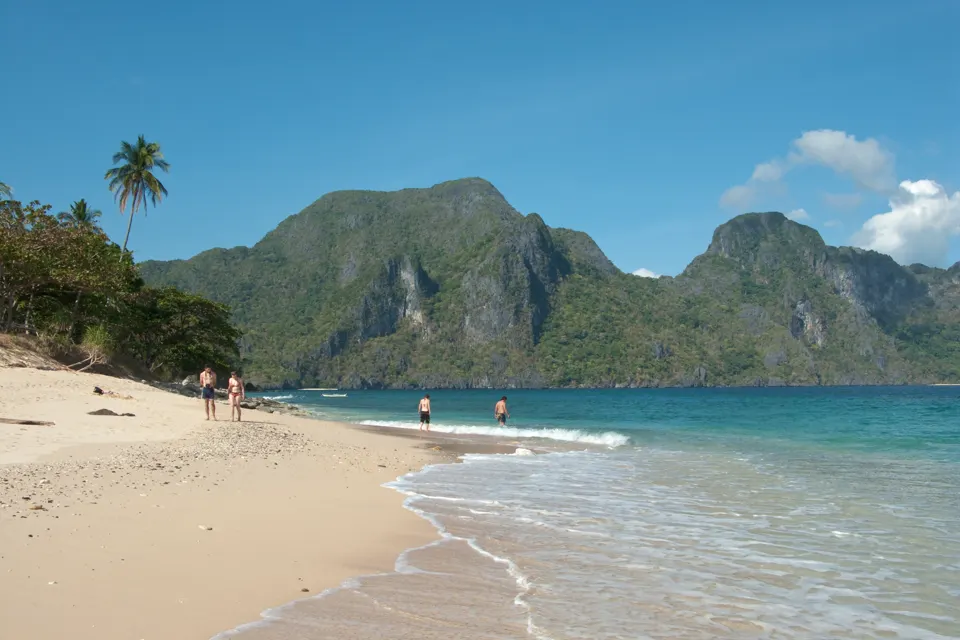
Limestone islands in El Nido Bay, Palawan

Action Maps / Action Map 10

Action Map 10: Philippines & the Coral Triangle

Use what works around the world in the Philippines and the Coral Triangle: local species, laws, partners and the work already happening here.

PreserveConserveRestoreProtectRegenerate

Photo: Vyacheslav Argenberg, CC BY 4.0

Sample game plan

The three lowest-effort first moves for this Action Map. Cost levels are qualitative estimates, not quotes.

2

Keep a private partner shortlist current

Why it matters

UP MSI, WPU, Sulubaaï, MERF and Malampaya Foundation have public records; none has agreed to anything.

What it takes

People
Coordinator
Time
Ongoing
Cost
Low
Permits & partners
None; no outreach announced

Roadmap

This Action Map ties the others to Philippine law, institutions and the Coral Triangle. Its roadmap is about understanding the rules, learning from Filipino-led precedents across the country, and only then formalizing partnerships in writing.

From the easiest work to the most advanced. In planning, and not legal advice.

  1. Stage 1: Beginner

    Learn the national frame. The Philippines sits in the Coral Triangle (Coral Triangle Initiative on Coral Reefs, Fisheries and Food Security), the central Philippines has been called the “center of the center” of marine shore-fish diversity (Carpenter and Springer 2005, the Philippines as the “center of the center” of marine shore-fish biodiversity), Tubbataha in the Sulu Sea is a World Heritage Site (UNESCO World Heritage Centre, Tubbataha Reefs Natural Park), and GCRMN reported that the East Asian Seas had on average more coral in 2019 than in 1983 (GCRMN, Status of Coral Reefs of the World: 2020). Write a plain-language explainer of who may handle coral: the Fisheries Code (Philippine Fisheries Code of 1998, Sec. 91 (RA 8550)), FAO 233 (FAO 233 (2010), Aquatic Wildlife Conservation), the Constitution and the Foreign Investment Negative List (1987 Constitution, Art. XII, Sec. 2; 13th Regular Foreign Investment Negative List (EO 113, s. 2026)). Keep a private, research-only partner shortlist; nothing is announced.

    Ready for the next step when: The rules explainer is published, and the partner shortlist is kept current.

  2. Stage 2: Intermediate

    Walk the permit chain on paper with Philippine counsel: PAMB review inside protected areas (Expanded NIPAS Act of 2018 (RA 11038)), a DENR-EMB ECC or CNC (PD 1586 / Philippine EIS System (DENR-EMB ECC/CNC)), BFAR authority and LGU permits, plus regional layers such as Palawan’s PCSD clearance (Strategic Environmental Plan for Palawan Act (RA 7611)). Study Filipino-led precedents nationwide: UP MSI in Bolinao (UP MSI coral cryobank announcement), Silliman IEMS in the Visayas (Silliman University, 10 Dec 2025 — SU-IEMS coral reef restoration research), DORSU in Pujada Bay (DORSU, 23 Jul 2025 — Pujada Bay artificial reef results), and in Palawan the 2024 Port Barton larval release (Palawan News, 6 June 2024 — Port Barton coral larvae release (ACIAR, San Vicente LGU, UP MSI, SCU, WPU)) and Sulubaaï’s Taytay program (Blancpain Ocean Commitment, Feb 2025 — Sulubaaï / Pangatalan, Taytay). Prepare non-binding conversation notes for UP MSI, Silliman, UP Visayas, MSU, MERF, WPU and others. Keep a written record of what each rule requires, which agency issues it, and how long it typically takes, so the timeline for any site is realistic.

    Ready for the next step when: Counsel has mapped the permit chain for any candidate site, and conversation notes are ready.

  3. Stage 3: Advanced

    If a Filipino institution agrees, sign a written MOA in which it holds the BFAR permits and owns any coral stock, and the center provides land, facilities, funding and non-formal education. Report to national and Coral Triangle programs through partners rather than building a parallel system. Any coral or in-water step is led by a Filipino institution that holds the BFAR permits, under a written MOA. The center funds and supports; coral is never sold; and education stays non-formal. The advanced goal is a center that strengthens Filipino reef science and stays honest about law, evidence and the limits of restoration in a warming ocean.

    Ready for the next step when: A signed MOA sets out roles, permits and coral ownership with a Filipino institution.

Why it matters

A place-specific Action Map keeps content honest about UP Marine Science Institute science, the Coral Triangle Initiative, DENR and BFAR, regional bodies such as Palawan’s PCSD, and existing work from Bolinao to the Visayas, Palawan and Mindanao.

Topics this Action Map will cover

How it connects

Feeds all Action Maps with local context.

Key sources

Books

Research library

Filter this Action Map’s papers by the action they help you take — Preserve, Conserve, Restore, Protect or Regenerate.

Loading research for this Action Map…

Philippines action plan

The Philippines sits in the Coral Triangle, the center of coral diversity. Its reefs run from Bolinao in northern Luzon through the Verde Island Passage, the Visayas and the Sulu Sea to Mindanao, and national rules — not only local enthusiasm — will decide what a planned center may do.

In planning, and not legal advice. This is a working educational plan for a center that is not yet operating or permitted. Confirm every permit with Philippine counsel, BFAR, DENR (including the Biodiversity Management Bureau and the Protected Area Management Board of any protected area), DENR-EMB, the relevant LGU and, in Palawan, the PCSD, before any field work.

Who can lead in-water coral work. Gathering, possessing, selling or exporting corals is generally unlawful in the Philippines, except for scientific or research purposes under a special permit from the Department of Agriculture / BFAR (Philippine Fisheries Code of 1998, Sec. 91 (RA 8550); BFAR FAO 202, s. 2000, Ban on Coral Exploitation and Exportation). Collection and conservation breeding of aquatic wildlife, including coral, is also regulated under FAO 233, issued pursuant to the Wildlife Act, and typically requires a Gratuitous Permit or related BFAR authority (FAO 233 (2010), Aquatic Wildlife Conservation; FAO 233 text (FAOLEX); Wildlife Resources Conservation and Protection Act (RA 9147)). The Constitution reserves exploration, development and utilization of natural resources to Filipino citizens or corporations at least 60% Filipino-owned, and the 13th Regular Foreign Investment Negative List reserves utilization of marine resources in archipelagic waters, the territorial sea and the EEZ to Philippine nationals (1987 Constitution, Art. XII, Sec. 2; 13th Regular Foreign Investment Negative List (EO 113, s. 2026)). For those reasons, any in-water coral work contemplated here would be led by Filipino scientific and community partners, not by a foreign principal acting alone.

The permit chain (to be confirmed site by site, anywhere in the Philippines) generally includes: review by the Protected Area Management Board where a site lies inside a protected area under the Expanded NIPAS Act (Expanded NIPAS Act of 2018 (RA 11038)); an Environmental Compliance Certificate or Certificate of Non-Coverage from DENR-EMB under the EIS System (PD 1586 / Philippine EIS System (DENR-EMB ECC/CNC)); BFAR authority for any coral handling; and local government permits. Municipal fisherfolk have preferential rights in municipal waters under the Fisheries Code. Some regions add their own layer. In Palawan, for example, that means Palawan Council for Sustainable Development (PCSD) zoning/ECAN certification and SEP clearance under RA 7611 (Strategic Environmental Plan for Palawan Act (RA 7611)); and, at El Nido, review by the Protected Area Management Board of the El Nido–Taytay Managed Resource Protected Area (Presidential Proclamation No. 32, s. 1998 (ENTMRPA)).

Existing work across the country. Filipino institutions already lead reef science and restoration nationwide: the University of the Philippines Marine Science Institute and the Marine Environment and Resources Foundation in Bolinao and beyond (UP MSI coral cryobank announcement; MERF / ACIAR coral larval restoration project); Silliman University’s Institute of Environmental and Marine Sciences in the Visayas and Mindanao (Silliman University, 10 Dec 2025 — SU-IEMS coral reef restoration research; Silliman University, 29 Jun 2026 — SU-IEMS fish visual census training, Davao Oriental); UP Visayas (UP Visayas CFOS-IMFO, coral reef assessment training in Antique); Mindanao State University at Naawan (MSU at Naawan, Coral Reef Management (CoReM) Hub); Davao Oriental State University in Pujada Bay (DORSU, 23 Jul 2025 — Pujada Bay artificial reef results); the Coastal Conservation and Education Foundation (CCEF, Aug 2024 — 3D-printed clay reef workshop, Maria, Siquijor); and local programs such as the El Nido Foundation in Palawan (El Nido Foundation, Coral Reef Restoration and Education Program). A planned center should complement that work, not overwrite it. A public record of past work is not a partnership agreement, and current BFAR permit numbers were not independently verified for this page.

First 90 days

Year 1

Longer term

Learning path

A beginner-to-expert arc: start with why the work matters, then methods and sources, then local application with Filipino partners.

Beginner

Learn what the Coral Triangle is, why the Philippines is part of it, and that some regions, such as Palawan, add their own law (RA 7611 / PCSD).

Intermediate

Walk the official sources for FAO 233, the Fisheries Code, the Expanded NIPAS Act and the 13th FINL. Read GCRMN’s finding on East Asian Seas coral cover.

Expert

Keep the legal and scientific briefing current, and route formal legal questions to Philippine counsel — this site is not legal advice.

Key organizations & tools

These are other organisations’ resources and public programs. Listing them is not a partnership claim.

Glossary & FAQ

Answers are limited to points we can cite from the research library or from official and peer-reviewed sources. Questions we cannot answer that way are left out.

What is the coral triangle?

The Coral Triangle is the tropical marine region of the western Pacific recognized by the Coral Triangle Initiative on Coral Reefs, Fisheries and Food Security (CTI-CFF). The Philippines is one of the six member countries. Coral Triangle Initiative on Coral Reefs, Fisheries and Food Security

Why is the coral triangle important?

It is the global center of coral and reef-fish diversity and the focus of a six-country cooperation initiative (CTI-CFF). GCRMN 2020 reported that the East Asian Seas region, including the Coral Triangle, had on average more coral in 2019 than in 1983, even after bleaching. Coral Triangle Initiative on Coral Reefs, Fisheries and Food Security; GCRMN, Status of Coral Reefs of the World: 2020

Does the Philippines have coral reefs?

Yes. The country is part of the Coral Triangle (Coral Triangle Initiative on Coral Reefs, Fisheries and Food Security), and its reefs stretch from Bolinao in northern Luzon to Tubbataha in the Sulu Sea, a UNESCO World Heritage Site (UNESCO World Heritage Centre, Tubbataha Reefs Natural Park), and to Mindanao. Carpenter and Springer identified the central Philippines as the “center of the center” of marine shore-fish diversity (Carpenter and Springer 2005, the Philippines as the “center of the center” of marine shore-fish biodiversity).

Next step