Reef Tribe
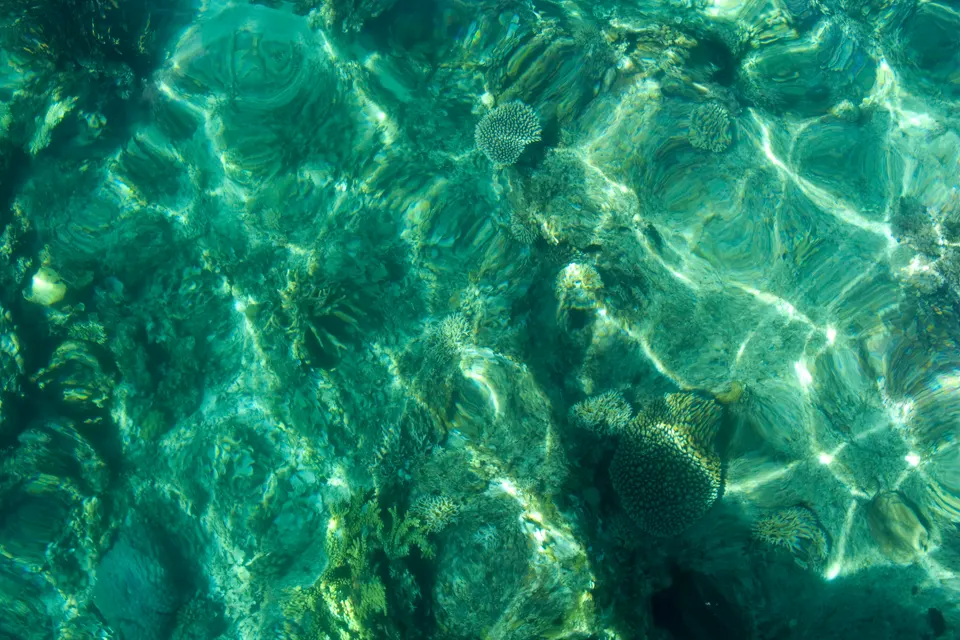
Branching coral in clear water, Bacuit Bay, El Nido, Palawan

Action Plans / Action Plan 3

Action Plan 3: Coral Gardening & Nurseries

The most common method: grow small pieces of coral in a nursery, then plant them back on the reef, using corals from many different parents and checking on them over time.

PreserveConserveRestoreProtectRegenerate

Sample game plan

The three lowest-effort first moves for this Action Plan. Cost levels are qualitative estimates, not quotes.

1

Read the Philippine nursery record first

Why it matters

Cabaitan et al. found waves and predators limited transplant success in the Philippines (Cabaitan et al. 2015, Philippine coral transplantation); learning that costs nothing.

What it takes

People
1 researcher
Time
2–3 weeks
Cost
Low
Permits & partners
None
2

Write the objectives and monitoring plan

Why it matters

Most reviewed projects were small (median ~100 m²) and short; setting goals first avoids repeating that (Boström-Einarsson et al. 2020).

What it takes

People
1 researcher + Filipino scientist reviewer
Time
1 month
Cost
Low
Permits & partners
None on paper; any nursery later needs a Filipino permit holder under an MOA

Roadmap

Coral gardening is the method most people picture when they hear “reef restoration,” and it is also the one most bound by Philippine wildlife law. This roadmap therefore spends its first two stages on learning and planning, and puts any nursery in the hands of a permitted Filipino institution.

From the easiest work to the most advanced. In planning, and not legal advice.

  1. Stage 1: Beginner

    Coral gardening is in-water coral work, so the beginner stage is learning, not building. Read the global review by Boström-Einarsson and colleagues: most projects were small (median about 100 m²) and short, with typical reported survival around 60–70% (Boström-Einarsson et al. 2020). Read Cabaitan et al. on Philippine transplantation, where wave exposure and predators limited success (Cabaitan et al. 2015, Philippine coral transplantation). Study existing Filipino programs, such as CCEF’s clay-reef work in Siquijor (CCEF, Aug 2024 — 3D-printed clay reef workshop, Maria, Siquijor) and the El Nido Foundation in Palawan (El Nido Foundation, Coral Reef Restoration and Education Program), and the permit rules: corals may be gathered only for science under DA/BFAR permit (Philippine Fisheries Code of 1998, Sec. 91 (RA 8550); BFAR FAO 202, s. 2000, Ban on Coral Exploitation and Exportation), and FAO 233 governs collection and breeding (FAO 233 (2010), Aquatic Wildlife Conservation).

    Ready for the next step when: The literature review and permit summary are written and checked by a Filipino scientist and counsel.

  2. Stage 2: Intermediate

    Write the plan before anything goes in the water: objectives, site criteria, species choices, a monitoring design from the manager guides (Shaver et al. 2020, manager's guide), and a permit checklist reviewed by Philippine counsel. Learn from documented Philippine programs. In Palawan, Sulubaaï in Taytay reported about 76% survival for coral cuttings across around 30 species and roughly 3,000 colonies on rubble-stabilising structures in 2024 (Blancpain Ocean Commitment, Feb 2025 — Sulubaaï / Pangatalan, Taytay); in Mindanao, Davao Oriental State University reports results from artificial reefs in Pujada Bay (DORSU, 23 Jul 2025 — Pujada Bay artificial reef results). Hold non-binding conversations with possible Filipino leads such as UP MSI, MERF, Silliman IEMS, MSU, WPU or Sulubaaï. Nothing is announced as a partnership until a written MOA exists. Draft, with a Filipino scientist, the questions a nursery would need to answer: which species, which depth, which predators, and who checks the corals after storms.

    Ready for the next step when: A nursery concept with objectives, monitoring and a permit checklist exists, and a Filipino lead has shown interest.

  3. Stage 3: Advanced

    If a Filipino institution chooses to lead, and holds the BFAR permits, the center can co-design and fund a small nursery at a site that is already protected and has clean water. Outplanting would be separately permitted, monitored for years, and paired with herbivore and protection measures. Coral stock belongs to the Filipino permit holder, and no coral is ever sold. Scale only when monitoring shows survival and growth that justify it, and remember that restoration does not replace action on warming (Boström-Einarsson et al. 2020). Any coral or in-water step is led by a Filipino institution that holds the BFAR permits, under a written MOA. The center funds and supports; coral is never sold; and education stays non-formal.

    Ready for the next step when: A signed MOA and BFAR permits held by the Filipino partner are in place before any fragment is cut.

Why it matters

The most widely used active method worldwide (Boström-Einarsson et al. 2020; Shaver et al. 2020).

Topics this Action Plan will cover

How it connects

Feeds Science & Monitoring (what gets measured), Community (volunteer dives, jobs), and Creating New Reefs (need for stable substrate). Is fed by Preservation, Water Quality, and Microfragmentation (stock).

Key sources

Videos

Explore the Blue: 360° Coral RestorationNOAA Sanctuaries · 4:04 · Action Plan 3: Coral Gardening & NurseriesA NOAA 360° look at growing fragments and outplanting them, good as the gardening-hub opener.Watch on YouTube ↗
NOAA Ocean Today video: 'Restoring Coral Reefs'noaa · 2:18 · Action Plan 3: Coral Gardening & NurseriesShort official Ocean Today explainer of how NOAA uses nurseries and transplanting to restore damaged reefs.Watch on YouTube ↗
NOAA Assembles and Fills Up New Coral NurseryNOAA Fisheries · 1:03 · Action Plan 3: Coral Gardening & NurseriesShows a NOAA Fisheries team assembling and stocking a new in-water coral nursery.Watch on YouTube ↗
Giving The Gift of Reef RestorationCoral Restoration Foundation · 1:24 · Action Plan 3: Coral Gardening & NurseriesA short official CRF film on supporting outplanting and nursery work.Watch on YouTube ↗
Preparing Corals for Mustique NurseryCoral Restoration Foundation International · 1:06 · Action Plan 3: Coral Gardening & NurseriesPractitioner footage of preparing fragments for an in-water coral-tree nursery (Mustique).Watch on YouTube ↗
Mustique Island Nursery InstallationCoral Restoration Foundation International · 2:59 · Action Plan 3: Coral Gardening & NurseriesInstallation of a coral-tree nursery, useful as a how-the-gear-goes-in piece on the gardening hub.Watch on YouTube ↗

Books

Research library

Filter this Action Plan’s papers by the action they help you take — Preserve, Conserve, Restore, Protect or Regenerate.

Loading research for this Action Plan…

Philippines action plan

Coral gardening and nurseries are a later step, and in the Philippines they are in-water coral work: they need Filipino scientific leads, BFAR authority, and a site that is already being protected and kept clean.

In planning, and not legal advice. This is a working educational plan for a center that is not yet operating or permitted. Confirm every permit with Philippine counsel, BFAR, DENR (including the Biodiversity Management Bureau and the Protected Area Management Board of any protected area), DENR-EMB, the relevant LGU and, in Palawan, the PCSD, before any field work.

Who can lead in-water coral work. Gathering, possessing, selling or exporting corals is generally unlawful in the Philippines, except for scientific or research purposes under a special permit from the Department of Agriculture / BFAR (Philippine Fisheries Code of 1998, Sec. 91 (RA 8550); BFAR FAO 202, s. 2000, Ban on Coral Exploitation and Exportation). Collection and conservation breeding of aquatic wildlife, including coral, is also regulated under FAO 233, issued pursuant to the Wildlife Act, and typically requires a Gratuitous Permit or related BFAR authority (FAO 233 (2010), Aquatic Wildlife Conservation; FAO 233 text (FAOLEX); Wildlife Resources Conservation and Protection Act (RA 9147)). The Constitution reserves exploration, development and utilization of natural resources to Filipino citizens or corporations at least 60% Filipino-owned, and the 13th Regular Foreign Investment Negative List reserves utilization of marine resources in archipelagic waters, the territorial sea and the EEZ to Philippine nationals (1987 Constitution, Art. XII, Sec. 2; 13th Regular Foreign Investment Negative List (EO 113, s. 2026)). For those reasons, any in-water coral work contemplated here would be led by Filipino scientific and community partners, not by a foreign principal acting alone.

The permit chain (to be confirmed site by site, anywhere in the Philippines) generally includes: review by the Protected Area Management Board where a site lies inside a protected area under the Expanded NIPAS Act (Expanded NIPAS Act of 2018 (RA 11038)); an Environmental Compliance Certificate or Certificate of Non-Coverage from DENR-EMB under the EIS System (PD 1586 / Philippine EIS System (DENR-EMB ECC/CNC)); BFAR authority for any coral handling; and local government permits. Municipal fisherfolk have preferential rights in municipal waters under the Fisheries Code. Some regions add their own layer. In Palawan, for example, that means Palawan Council for Sustainable Development (PCSD) zoning/ECAN certification and SEP clearance under RA 7611 (Strategic Environmental Plan for Palawan Act (RA 7611)); and, at El Nido, review by the Protected Area Management Board of the El Nido–Taytay Managed Resource Protected Area (Presidential Proclamation No. 32, s. 1998 (ENTMRPA)).

Existing work across the country. Filipino institutions already lead reef science and restoration nationwide: the University of the Philippines Marine Science Institute and the Marine Environment and Resources Foundation in Bolinao and beyond (UP MSI coral cryobank announcement; MERF / ACIAR coral larval restoration project); Silliman University’s Institute of Environmental and Marine Sciences in the Visayas and Mindanao (Silliman University, 10 Dec 2025 — SU-IEMS coral reef restoration research; Silliman University, 29 Jun 2026 — SU-IEMS fish visual census training, Davao Oriental); UP Visayas (UP Visayas CFOS-IMFO, coral reef assessment training in Antique); Mindanao State University at Naawan (MSU at Naawan, Coral Reef Management (CoReM) Hub); Davao Oriental State University in Pujada Bay (DORSU, 23 Jul 2025 — Pujada Bay artificial reef results); the Coastal Conservation and Education Foundation (CCEF, Aug 2024 — 3D-printed clay reef workshop, Maria, Siquijor); and local programs such as the El Nido Foundation in Palawan (El Nido Foundation, Coral Reef Restoration and Education Program). A planned center should complement that work, not overwrite it. A public record of past work is not a partnership agreement, and current BFAR permit numbers were not independently verified for this page.

First 90 days

Year 1

Longer term

Learning path

A beginner-to-expert arc: start with why the work matters, then methods and sources, then local application with Filipino partners.

Beginner

Learn what a coral nursery and outplanting are, and that most reviewed projects are small and short, with typical reported survival around 60–70% (Boström-Einarsson et al. 2020).

Intermediate

Read Cabaitan et al. (2015) on species mixes, waves and predators in the Philippines, and the UNEP/ICRI and Shaver manager guides.

Expert

If a Filipino partner leads, help write objectives, a permit checklist and a monitoring plan before any fragment is cut.

Key organizations & tools

These are other organisations’ resources and public programs. Listing them is not a partnership claim.

Glossary & FAQ

Answers are limited to points we can cite from the research library or from official and peer-reviewed sources. Questions we cannot answer that way are left out.

What is coral gardening?

Coral gardening is the nursery-and-outplant method used in many restoration projects: fragments are grown, then transplanted. Global reviews find most projects are small (median area 100 m²), short, and focused on fast-growing branching corals, with typical reported survival around 60–70% (Boström-Einarsson et al. 2020). Boström-Einarsson et al. 2020

Is coral gardening effective?

It can keep fragments alive and add coral at very local scales, but reviews caution that monitoring is often short, costs are high, and restoration is not a substitute for action on climate change or for protection and water quality (Boström-Einarsson et al. 2020; Bayraktarov et al. 2019; Hein et al. 2021). Boström-Einarsson et al. 2020; Bayraktarov et al. 2019; Hein et al. 2021

What is a coral nursery?

A nursery is where fragments or colonies are grown before outplanting. Bayraktarov et al. (2019) estimated a median restoration cost of about US$400,000 per hectare (2010 dollars), with the nursery phase of gardening among the less expensive ends of that range and artificial substrate among the most expensive. Bayraktarov et al. 2019

Next step