Reef Tribe
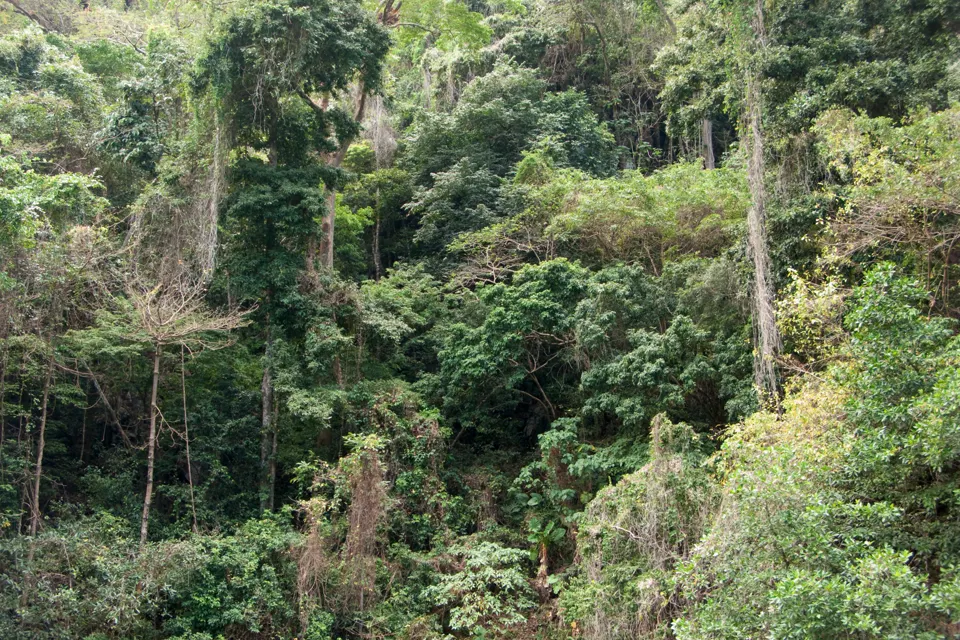
Coastal limestone forest, Bacuit Bay, Palawan

Action Plans / Action Plan 7

Action Plan 7: Creating New Reef Systems

When the reef’s rocky base is gone, build new places for coral to grow, such as holding loose rubble in place, steel “reef stars” and mineral-coated metal frames (Biorock), then let nature take over.

PreserveConserveRestoreProtectRegenerate

Sample game plan

The three lowest-effort first moves for this Action Plan. Cost levels are qualitative estimates, not quotes.

2

Visit, learn from, a working rubble program

Why it matters

Sulubaaï in Taytay reported about 300 rubble-stabilising structures and around 3,000 colonies in 2024 (Blancpain Ocean Commitment, Feb 2025 — Sulubaaï / Pangatalan, Taytay).

What it takes

People
Coordinator
Time
Desk review; site visit only if invited
Cost
Low
Permits & partners
None; learning, not installing
3

Write a ‘no structure unless’ rule

Why it matters

Adding substrate is among the costliest methods (Bayraktarov et al. 2019). A written rule keeps it a last resort.

What it takes

People
1 writer + Filipino reviewer
Time
1 week
Cost
Low
Permits & partners
None

Roadmap

Building new reef structure is the most visible and often the most expensive option. It comes late in the teaching order for a reason: it only makes sense where loose rubble or missing foundation prevents natural recovery. This roadmap keeps it a last resort.

From the easiest work to the most advanced. In planning, and not legal advice.

  1. Stage 1: Beginner

    New structure is the last step, used only where the reef’s foundation is gone. Start by reading both sides of the evidence. Sabater and Yap tested electrochemical mineral accretion in the northern Philippines and found higher six-month survival, though growth lagged natural colonies (Sabater and Yap 2002, mineral accretion in the northern Philippines). Knoester et al. found worse bleaching and recruitment on electrified tables in Kenya and advised against that approach for heat resilience (Knoester et al. 2024, mineral accretion caution). Write a simple rule: no structure unless protection, water quality and substrate surveys show it is needed. Look at what loose rubble does: it shifts in storms and buries young corals, which is why some programs stabilise it. Understanding that problem comes before choosing any product or design.

    Ready for the next step when: The evidence summary and the “no structure unless” rule are written.

  2. Stage 2: Intermediate

    Learn from working Philippine programs instead of starting one. In Mindanao, DORSU reports marine-life gains after artificial reef installation in Pujada Bay (DORSU, 23 Jul 2025 — Pujada Bay artificial reef results); CCEF has tested 3D-printed clay reefs in Siquijor (CCEF, Aug 2024 — 3D-printed clay reef workshop, Maria, Siquijor); and in Palawan, Sulubaaï in Taytay installed about 300 rubble-stabilising structures supporting around 3,000 colonies in 2024, per a February 2025 program page (Blancpain Ocean Commitment, Feb 2025 — Sulubaaï / Pangatalan, Taytay). If Filipino partners are willing, map substrate condition with them so any later decision is evidence-based. Note costs: adding artificial substrate is among the most expensive restoration methods (Bayraktarov et al. 2019), so budget conversations should start early and honestly. Visit only if invited, and treat what you see as one site’s results, not a template for every Philippine reef.

    Ready for the next step when: Partner-led substrate mapping shows where, if anywhere, foundation is missing.

  3. Stage 3: Advanced

    If partners and the relevant PAMB want to test structure, the trial would be small, permitted, monitored for years, and include a removal plan. Permits likely span the PAMB, DENR-EMB, BFAR and the LGU, plus PCSD in Palawan (Expanded NIPAS Act of 2018 (RA 11038); PD 1586 / Philippine EIS System (DENR-EMB ECC/CNC); Strategic Environmental Plan for Palawan Act (RA 7611)). Coral attached to structures is still coral handling, so any coral or in-water step is led by a Filipino institution that holds the BFAR permits, under a written MOA. The center funds and supports; coral is never sold; and education stays non-formal. The aim is to repair foundation where it is missing, not to build attractions. Structures that fail should be removed, and the results published so other Philippine sites can learn from them.

    Ready for the next step when: A permitted, monitored trial with a removal plan is approved by the PAMB and agencies.

Why it matters

This Action Plan covers artificial reefs, Biorock / mineral accretion, Mars-style steel frameworks, and rubble stabilization — and also says when not to dump concrete as a tourism prop.

Topics this Action Plan will cover

How it connects

Feeds Gardening and Larval (they need stable attachment). Is fed by Water Quality, Preservation, and Community (coastal engineering, moorings, tourism structures).

Key sources

Videos

Mars Coral Reef Restoration Efforts Show Remarkable ProgressMars, Incorporated · 1:54 · Action Plan 7: Creating New Reef SystemsOfficial Mars update on its steel-spider / reef-star method for rebuilding reef structure at scale.Watch on YouTube ↗

Books

Research library

Filter this Action Plan’s papers by the action they help you take — Preserve, Conserve, Restore, Protect or Regenerate.

Loading research for this Action Plan…

Philippines action plan

New structure (Reef Stars, mineral accretion, other artificial reefs) is a last resort: only where the reef’s foundation is gone, and only with evidence and permits. Philippine and later studies do not all agree.

In planning, and not legal advice. This is a working educational plan for a center that is not yet operating or permitted. Confirm every permit with Philippine counsel, BFAR, DENR (including the Biodiversity Management Bureau and the Protected Area Management Board of any protected area), DENR-EMB, the relevant LGU and, in Palawan, the PCSD, before any field work.

Who can lead in-water coral work. Gathering, possessing, selling or exporting corals is generally unlawful in the Philippines, except for scientific or research purposes under a special permit from the Department of Agriculture / BFAR (Philippine Fisheries Code of 1998, Sec. 91 (RA 8550); BFAR FAO 202, s. 2000, Ban on Coral Exploitation and Exportation). Collection and conservation breeding of aquatic wildlife, including coral, is also regulated under FAO 233, issued pursuant to the Wildlife Act, and typically requires a Gratuitous Permit or related BFAR authority (FAO 233 (2010), Aquatic Wildlife Conservation; FAO 233 text (FAOLEX); Wildlife Resources Conservation and Protection Act (RA 9147)). The Constitution reserves exploration, development and utilization of natural resources to Filipino citizens or corporations at least 60% Filipino-owned, and the 13th Regular Foreign Investment Negative List reserves utilization of marine resources in archipelagic waters, the territorial sea and the EEZ to Philippine nationals (1987 Constitution, Art. XII, Sec. 2; 13th Regular Foreign Investment Negative List (EO 113, s. 2026)). For those reasons, any in-water coral work contemplated here would be led by Filipino scientific and community partners, not by a foreign principal acting alone.

The permit chain (to be confirmed site by site, anywhere in the Philippines) generally includes: review by the Protected Area Management Board where a site lies inside a protected area under the Expanded NIPAS Act (Expanded NIPAS Act of 2018 (RA 11038)); an Environmental Compliance Certificate or Certificate of Non-Coverage from DENR-EMB under the EIS System (PD 1586 / Philippine EIS System (DENR-EMB ECC/CNC)); BFAR authority for any coral handling; and local government permits. Municipal fisherfolk have preferential rights in municipal waters under the Fisheries Code. Some regions add their own layer. In Palawan, for example, that means Palawan Council for Sustainable Development (PCSD) zoning/ECAN certification and SEP clearance under RA 7611 (Strategic Environmental Plan for Palawan Act (RA 7611)); and, at El Nido, review by the Protected Area Management Board of the El Nido–Taytay Managed Resource Protected Area (Presidential Proclamation No. 32, s. 1998 (ENTMRPA)).

Existing work across the country. Filipino institutions already lead reef science and restoration nationwide: the University of the Philippines Marine Science Institute and the Marine Environment and Resources Foundation in Bolinao and beyond (UP MSI coral cryobank announcement; MERF / ACIAR coral larval restoration project); Silliman University’s Institute of Environmental and Marine Sciences in the Visayas and Mindanao (Silliman University, 10 Dec 2025 — SU-IEMS coral reef restoration research; Silliman University, 29 Jun 2026 — SU-IEMS fish visual census training, Davao Oriental); UP Visayas (UP Visayas CFOS-IMFO, coral reef assessment training in Antique); Mindanao State University at Naawan (MSU at Naawan, Coral Reef Management (CoReM) Hub); Davao Oriental State University in Pujada Bay (DORSU, 23 Jul 2025 — Pujada Bay artificial reef results); the Coastal Conservation and Education Foundation (CCEF, Aug 2024 — 3D-printed clay reef workshop, Maria, Siquijor); and local programs such as the El Nido Foundation in Palawan (El Nido Foundation, Coral Reef Restoration and Education Program). A planned center should complement that work, not overwrite it. A public record of past work is not a partnership agreement, and current BFAR permit numbers were not independently verified for this page.

First 90 days

Year 1

Longer term

Learning path

A beginner-to-expert arc: start with why the work matters, then methods and sources, then local application with Filipino partners.

Beginner

Learn when people add structure, and why this library treats it as a last step, after protection and water quality.

Intermediate

Compare Sabater and Yap (2002) with Knoester et al. (2024), and read cost figures in Bayraktarov et al. (2019).

Expert

If ever asked to advise on a structure trial, insist on permits, a small footprint, heat-resilience monitoring and a removal plan.

Key organizations & tools

These are other organisations’ resources and public programs. Listing them is not a partnership claim.

Glossary & FAQ

Answers are limited to points we can cite from the research library or from official and peer-reviewed sources. Questions we cannot answer that way are left out.

What is biorock?

Biorock-style or mineral-accretion methods pass a low electrical current through a metal frame so dissolved minerals precipitate, creating a limestone-like substrate. Sabater and Yap (2002) tested electrochemical deposition with Porites cylindrica in the northern Philippines and found higher six-month survival (86% versus 70%) but still poorer performance than nearby natural colonies. Sabater and Yap 2002, mineral accretion in the northern Philippines

Do artificial reefs work?

Sometimes they provide structure; they are not automatically a restored ecosystem. Knoester et al. (2024) reported that corals on electrically charged mineral-accretion tables bleached more severely and recruited less well than controls during a heatwave, and advised against that setting to improve heat resilience. Cost reviews also find adding artificial substrate among the most expensive methods (Bayraktarov et al. 2019). Knoester et al. 2024, mineral accretion caution; Bayraktarov et al. 2019

Next step